
Gate Work in Photographs
These are photographs of gate work: sliding and swing gates, and the tracks, racks and openers that move them. They are grouped by the kind of gate and the part of the job they show, with a few words on what each group involves.
Sliding Gates
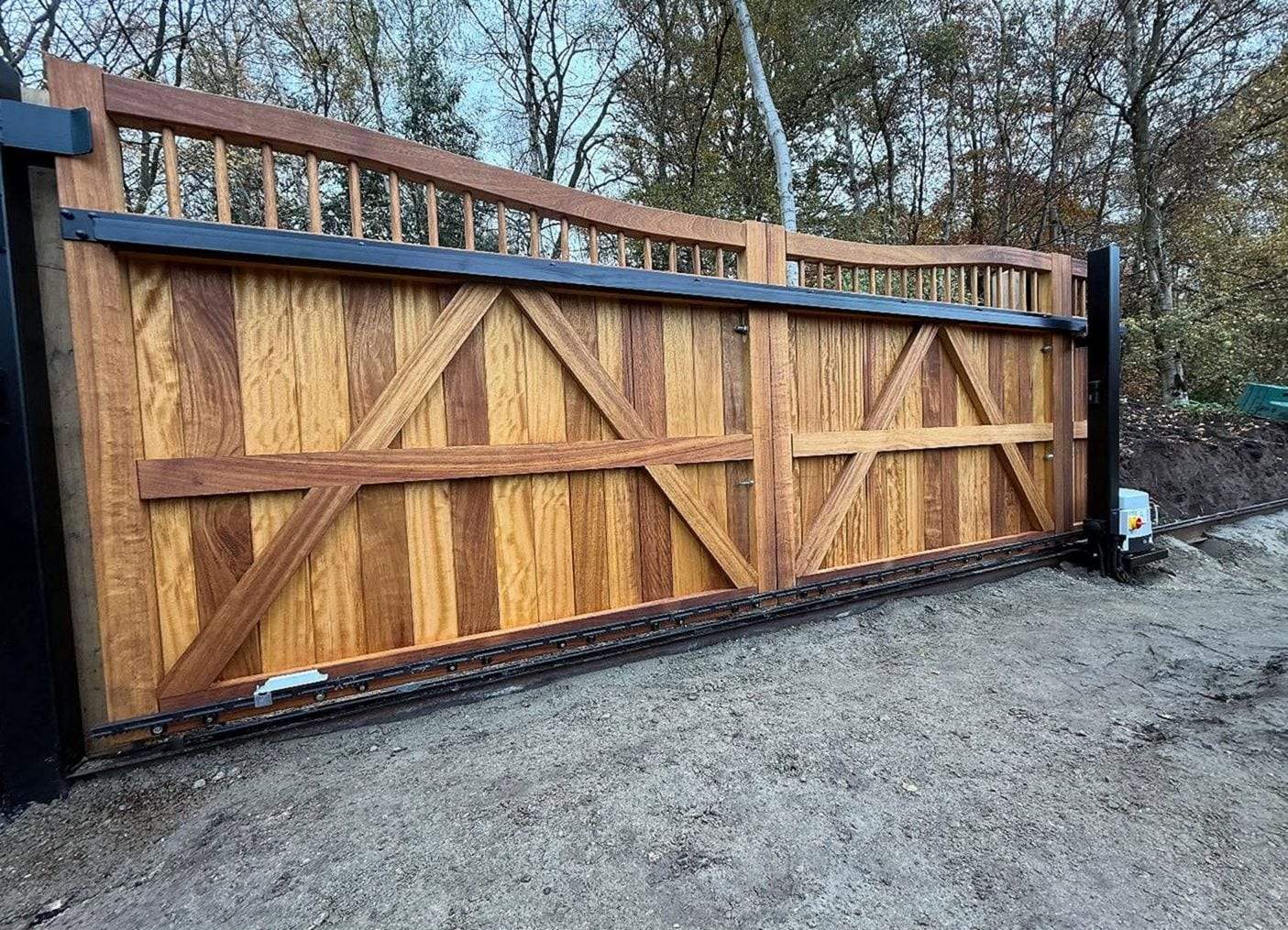
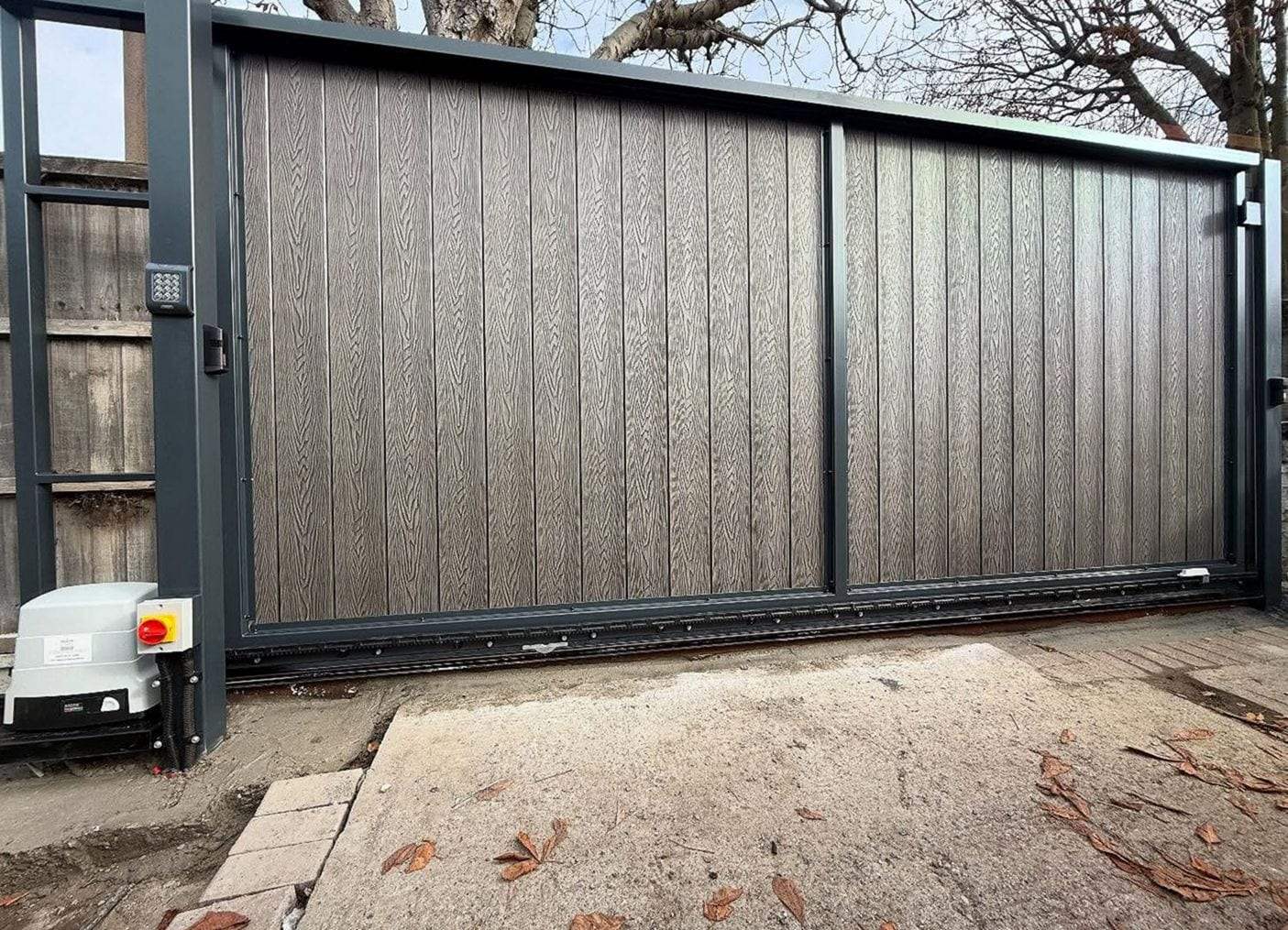
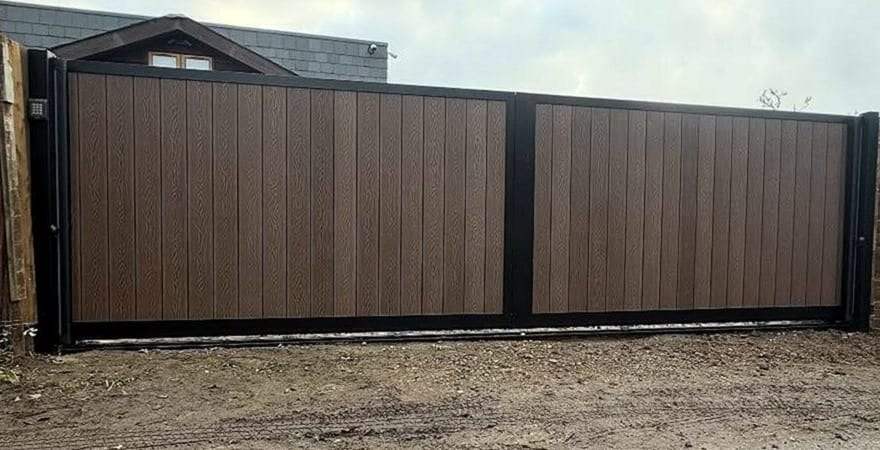
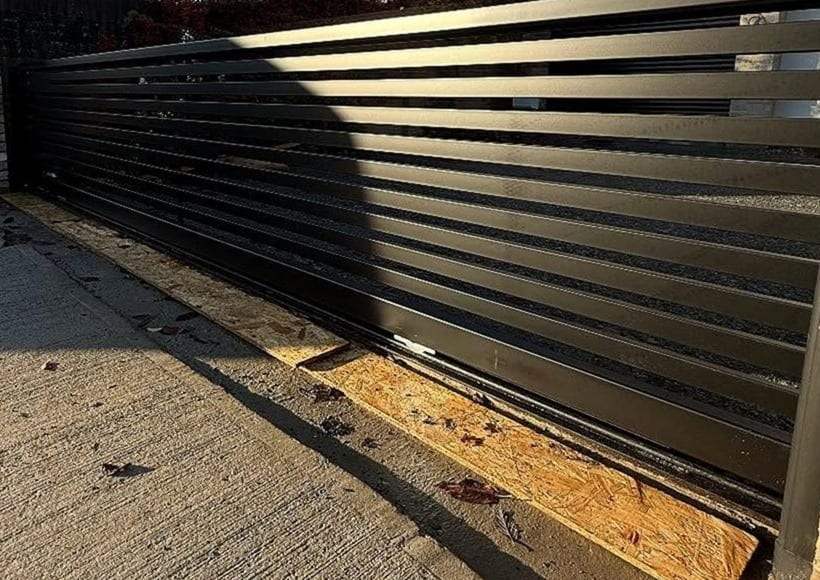
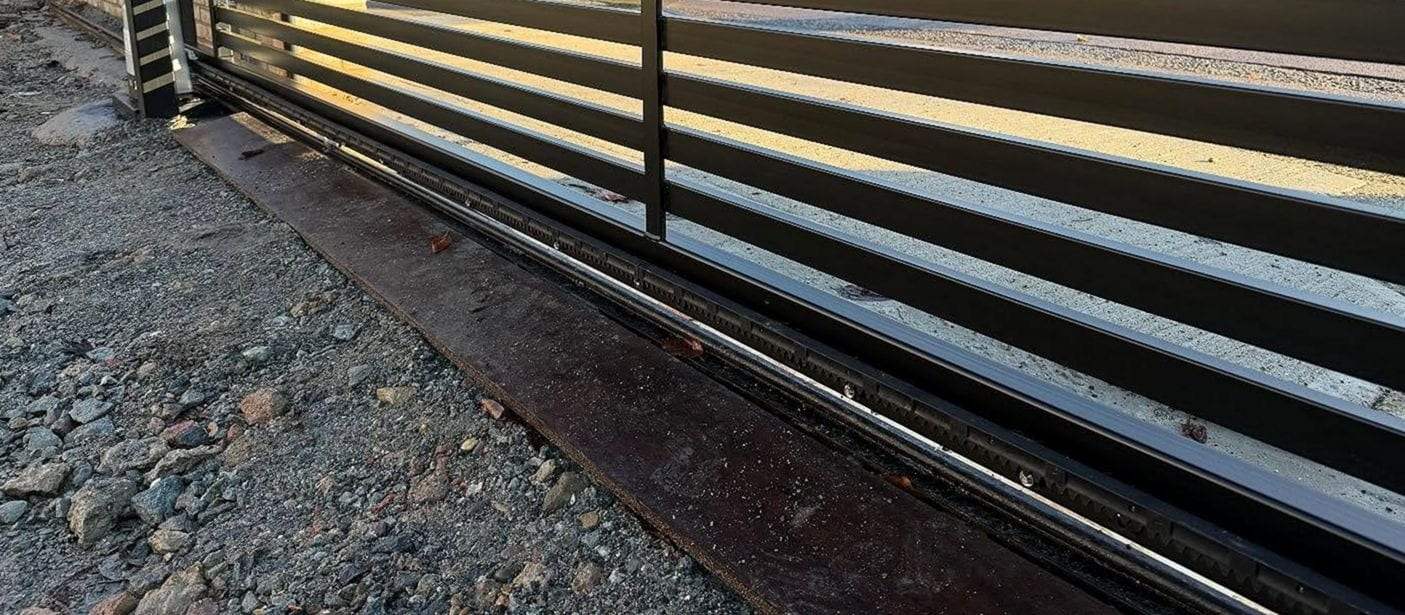
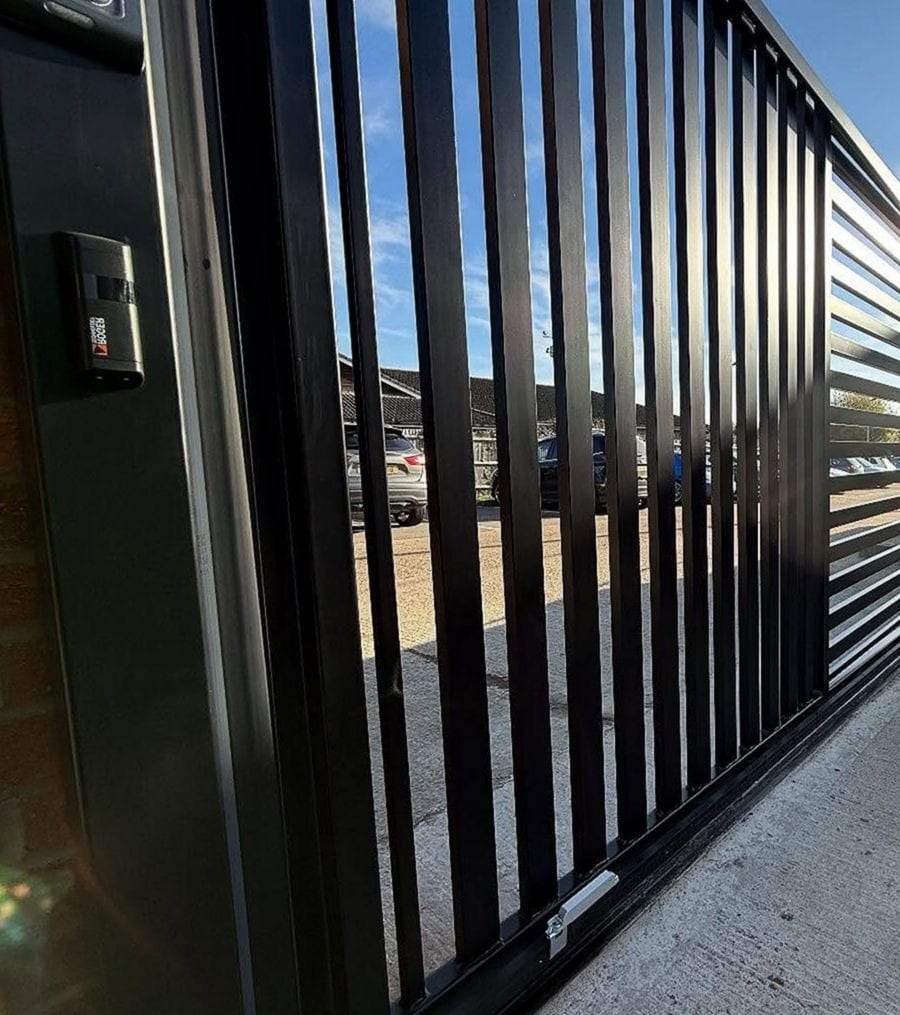
Sliding gates suit wide openings, sloped drives and entrances where there is no room for a gate to swing. These range from a hardwood gate with braced panels and a spindle top to composite and steel gates in dark frames. What they share is the hardware you rarely look at: the rollers, the guides and the ground track or cantilever frame that carry the weight, and the gear rack the opener drives. When those are level and in line, a heavy gate rolls with very little effort, and the opener lasts longer because it is not fighting the gate. A sliding gate also keeps the drive clear of a swinging leaf, which matters on a short drive or a slope, though its track needs to be kept free of gravel, leaves, snow and ice.
Tracks, Racks and Openers
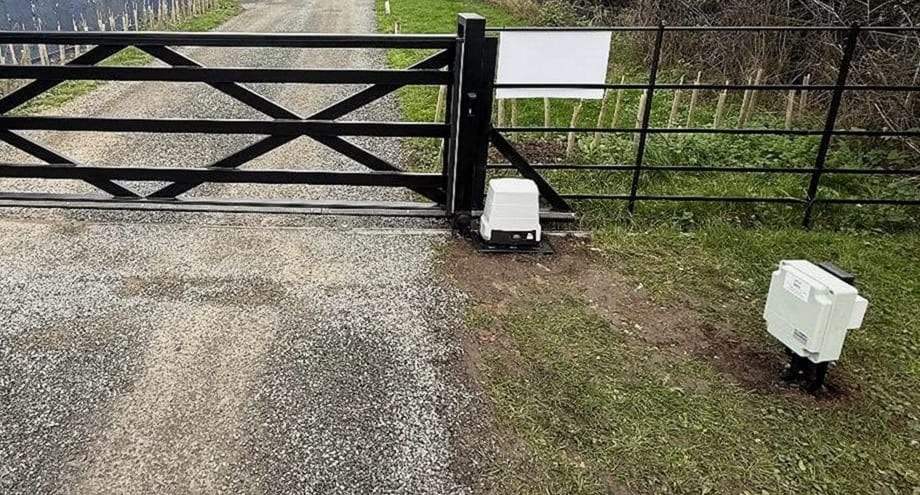
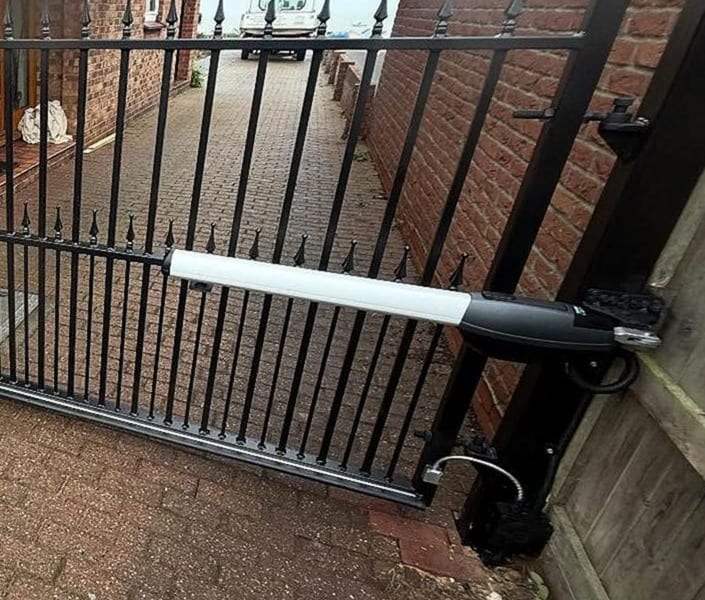
The working parts, up close. A toothed gear rack along the bottom rail meshes with the opener’s drive gear; a ground track keeps the gate in line; a ram-style arm pushes a swing gate open from its post; an operator housing and a control box sit at the end of a ranch-style lane. On commercial and shared gates, sensors on the posts watch the opening so the gate stops and reverses when something is in its way. These are the parts that wear, and the ones a service visit checks: the mesh between rack and gear, the arm’s mounts and pivots, the wiring into the control box, and the sensors that should stop the gate the moment the beam is broken.
Swing Gates
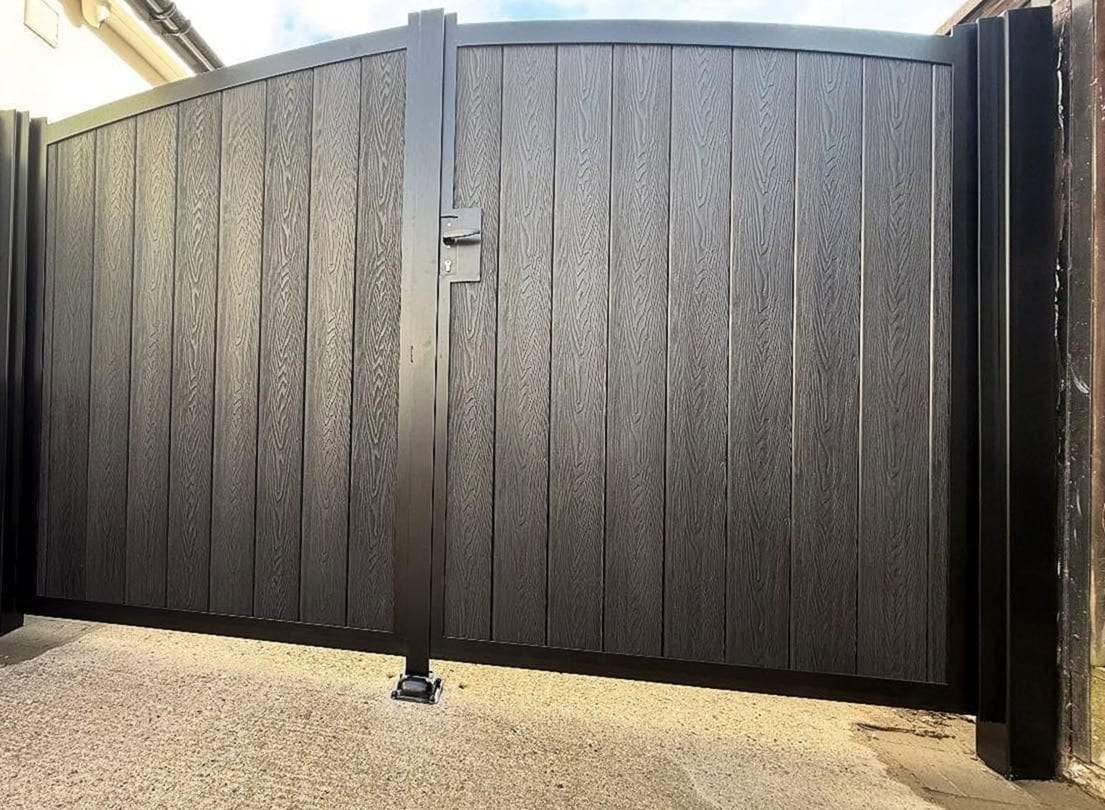
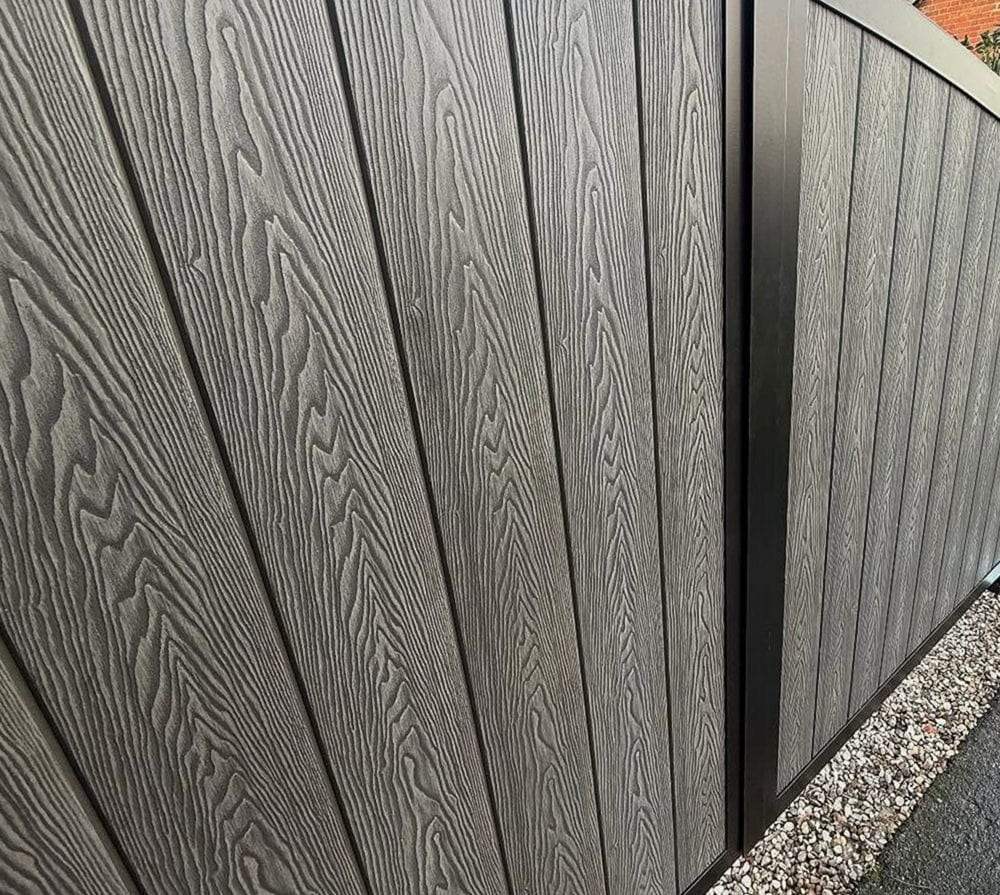
Swing gates are the classic driveway gate: a single leaf or a pair, hung on hinges from posts set in concrete. A pair with an arched top rail and a drop bolt into the drive closes the center; woodgrain composite panels in a steel frame keep the look of timber without the upkeep. A swing gate needs clear ground through its arc, and posts that stay put through the frost. When a swing gate starts to sag, the cause is usually at the hinge line: worn hinges, a post that has moved, or a frame racked out of square. Each of those can be put right before the latch stops catching.
Planning Gate Work?
Call or send the request form with the gate type, the opening width and what you have in mind.