
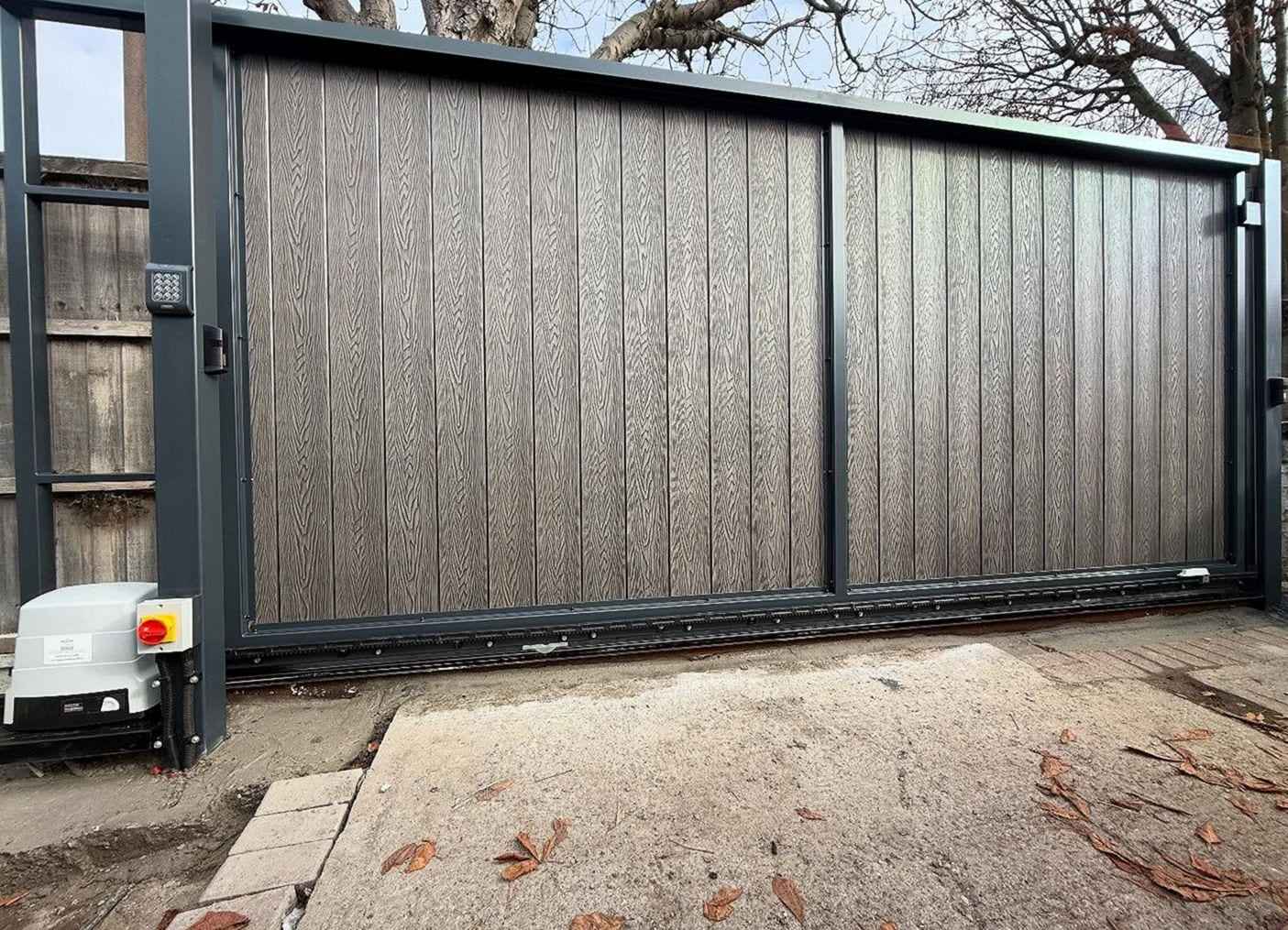
Gate Maintenance That Prevents Breakdowns
Most gate breakdowns start small: a hinge that needs grease, a roller beginning to flatten, a photo eye knocked out of line, a battery losing capacity. Caught early, each one is an adjustment. Left alone, it becomes a gate stuck across the drive on the coldest morning of the year. Routine maintenance is a visit for the parts that wear quietly, plus a short list of things owners can safely watch for themselves between visits.
Maintenance Checklist by Task
More columns to the right: swipe.
| Task | What is checked | Best season |
|---|---|---|
| Hinges and pivots | Wear on pins and bushings, loose bolts, sag at the latch end; cleaned and greased | Fall |
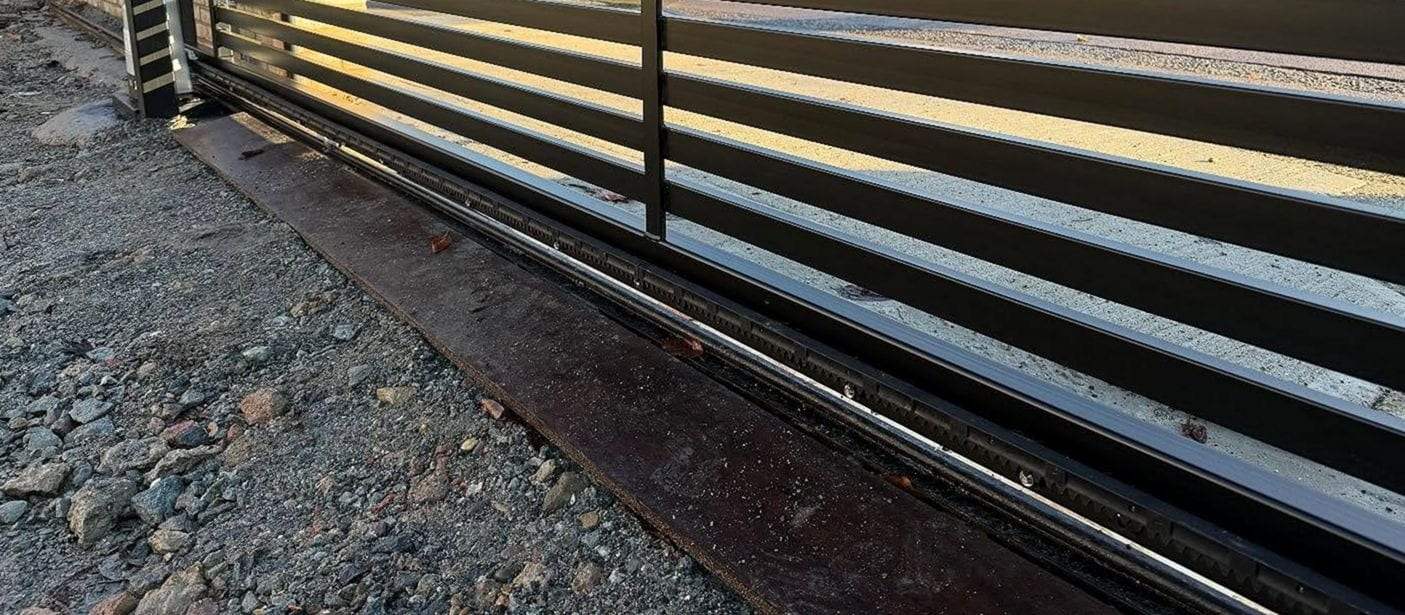
| Rollers, guides and track | Flat spots, bearings, track level and anchors, debris in the track | Fall and spring |
| Posts and footings | Lean, movement, cracks in the concrete after the freeze-thaw months | Spring |
| Opener drive | Gearbox noise, rack or chain mesh and tension, arm mounts | Fall |
| Safety devices | Photo eyes aligned and clean, safety edges, reversal on an obstruction | Every visit |
| Battery backup and solar | Battery capacity under load, panel clean and angled, charge in short days | Fall |
| Limits and force | Gate stops at the right points; force set to the gate, not raised to beat a drag | Every visit |
| Finish and frame | Chips, rust at welds and dents, loose pickets, sun-faded wood or coatings | Spring |
A Quick Monthly Look
These checks are safe for owners and take a few minutes. Keep clear of the gate while it moves, and switch the opener off before touching the track or the hinges.
- Clear leaves, gravel and debris out of a sliding gate’s track and from under a swing gate’s path
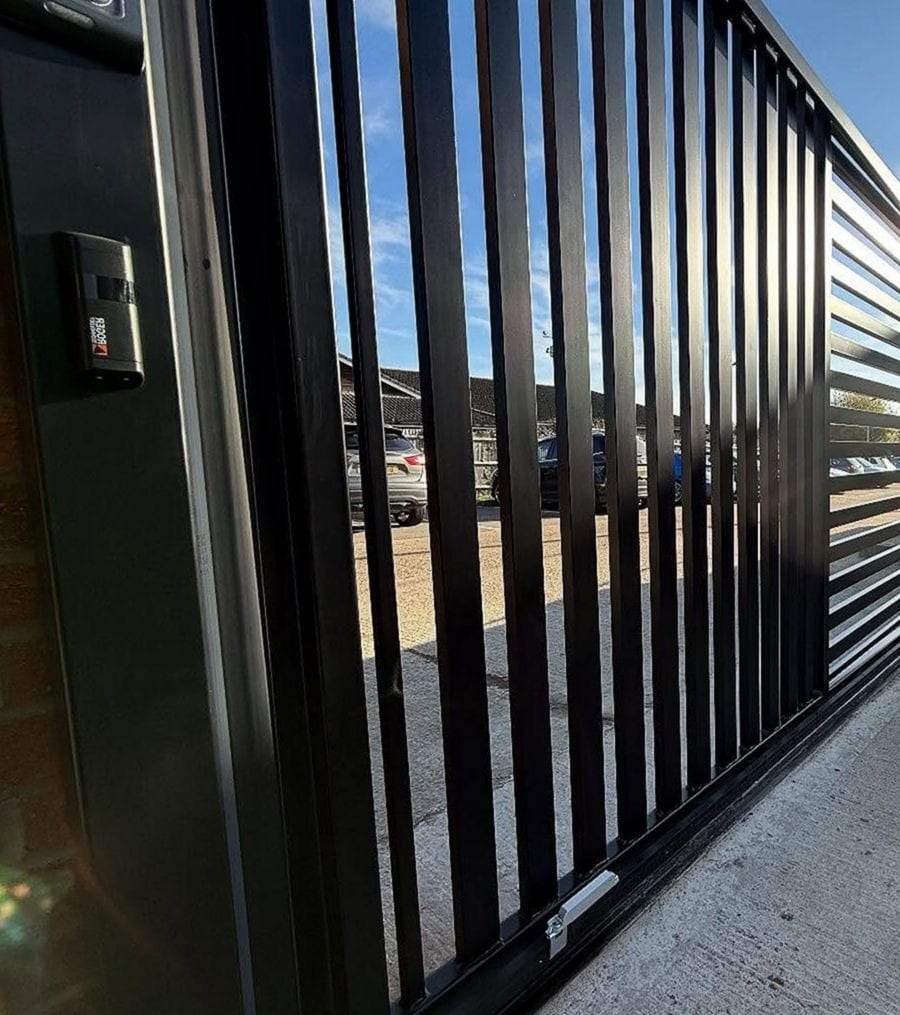
- Wipe the photo-eye lenses with a soft cloth and look that they still face each other
- Listen for new noises: grinding, clicking, squeals or a motor that labors
- Test the manual release the way the owner’s manual describes, so it works when you need it
- Watch for rubbing: shiny marks on a post, the ground or the guides where the gate touches
Dust, Snow and Sun
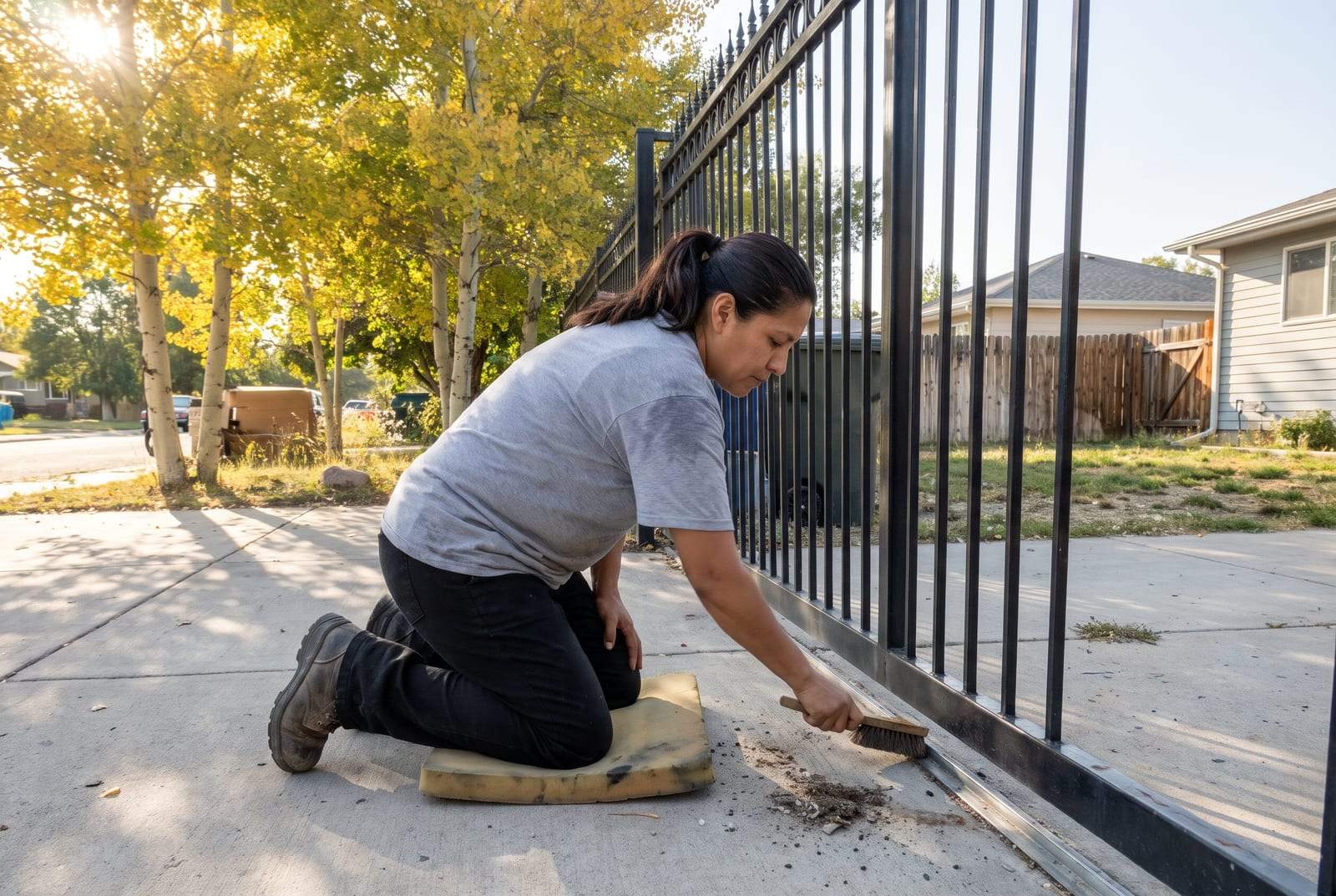
Dust. Dry summers and gravel drives put fine dust into everything. It mixes with grease into a paste that wears pins and bearings, which is why old grease is cleaned off before new goes on.
Snow and ice. Snow packs into tracks and against the bottom of a gate, and meltwater freezes in hinges and roller bearings overnight. A gate forced against ice strains the opener and can bend a frame.
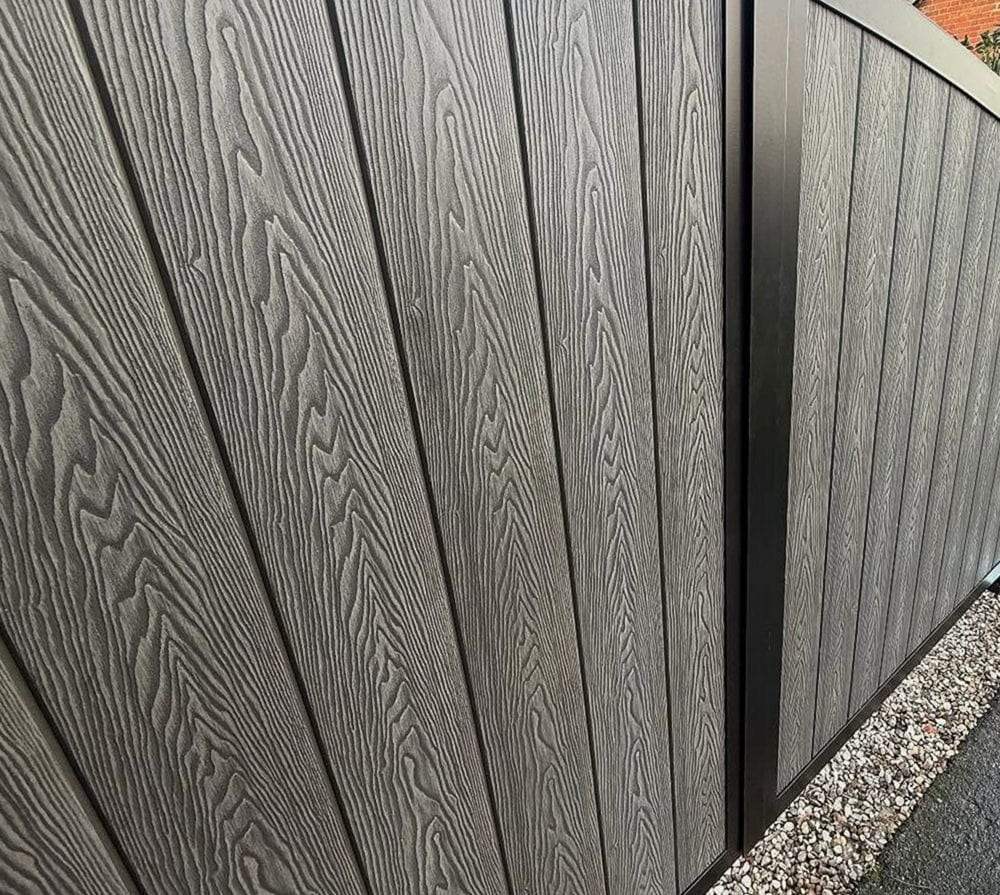
Sun. Strong sun at altitude fades and cracks finishes, dries out wood and ages plastic covers and photo-eye housings faster than people expect. Touching up chips before winter keeps rust from starting under them.
How Often, and Who Does What
How often should a gate be serviced?
For a household gate, once a year is a sensible minimum, ideally in the fall before snow and cold. A busy gate at an HOA entrance or a shared lot cycles many more times a day and benefits from a visit every few months. Any new noise, slowness or reversing is a reason to have it looked at sooner.
Which tasks should be left to a technician?
Anything inside the opener or its control box, the force and limit settings, the safety devices, springs, and anything that means lifting or supporting the gate. Adjusting force up to get a dragging gate to move hides the real problem and can defeat the gate’s ability to reverse on an obstruction. Clearing the track, wiping the photo eyes and watching for rubbing are owner jobs.
Book a Maintenance Visit
Call or send the request form and mention the gate type, the opener if you know it, and when it was last serviced.