
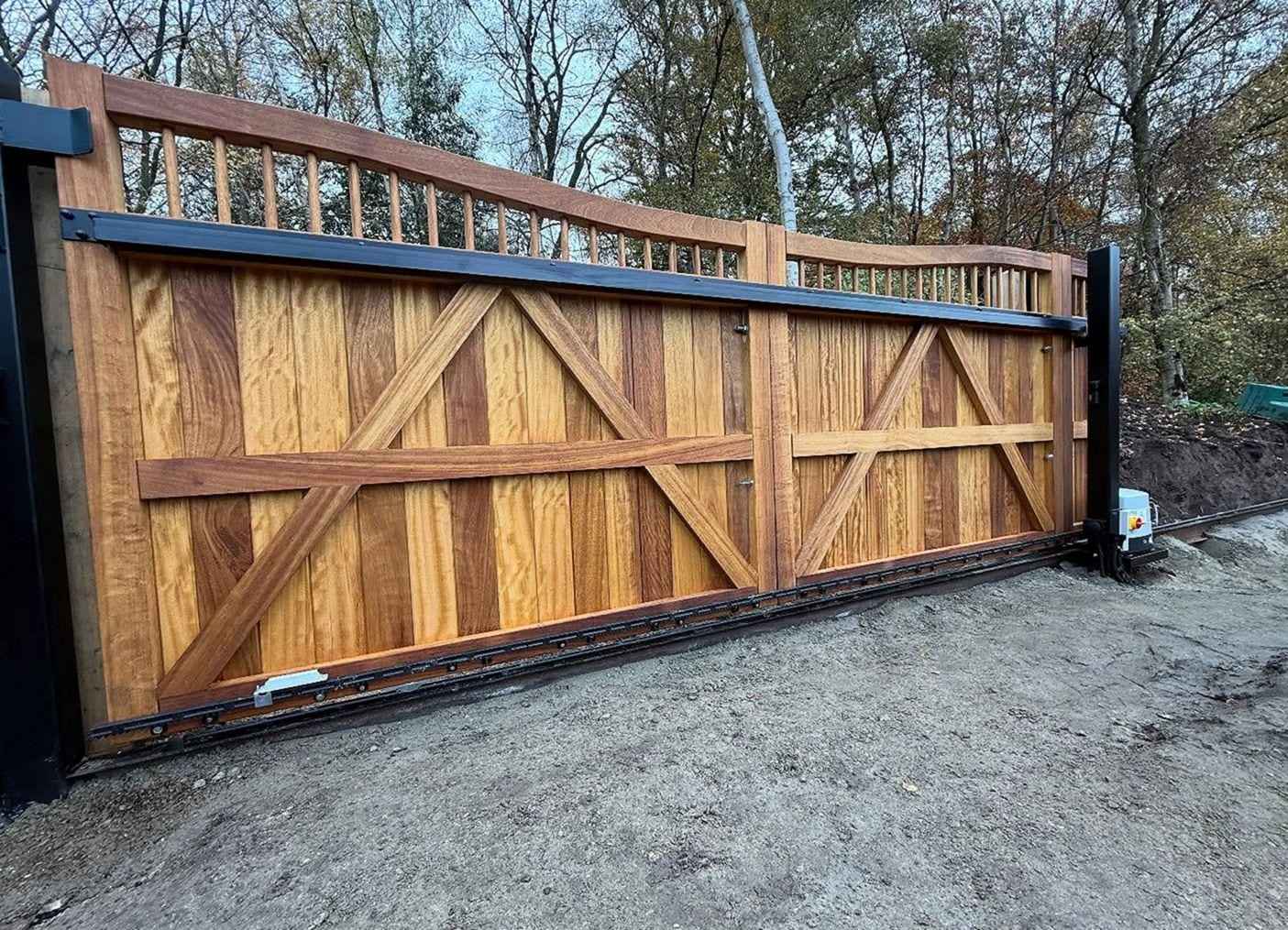
Our Approach to Gate Jobs
Much of what matters on a gate job happens where nobody is looking: in the footing under a post, the line of a track, the settings inside an operator and the safety devices that stop a gate before it closes on someone. This page explains how a job generally goes with us, and the safety and code rules that apply to gates and openers.
How a Gate Job Goes
Assessment
Many jobs now begin with photos and measurements sent from a phone. They show the gate, the opener and the problem well enough to bring the right parts, so the site visit is kept for what photos cannot show: the ground, the posts and how the gate moves under its own weight.
The Options
Most problems have more than one fix: a part replaced or the whole operator, a post braced or reset, a frame straightened or a new gate. The table below sets out the usual choices and what to weigh.
The Work
The mechanical side comes first, so the gate hangs level and moves freely by hand; then the opener, its settings and the access devices. A gate that drags will wear out even a new operator.
Testing
Before we call work finished, we check that the posts are plumb and that the gate travels level through its full swing or roll. We test the auto-reverse with an obstruction in the path, confirm that photo eyes and safety edges stop the gate, and cut the power to make sure the battery backup still opens it. Alfie Evans wants the last step to be cycling the gate repeatedly and listening for any drag or hesitation. Repairs are written up afterward, so you know what was done and what to watch.
Repair Options
More columns to the right: swipe.
| Situation | Option | Things to consider |
|---|---|---|
| Swing gate sagging | New hinges, post bracing or reset, frame straightened | Whether the post moves; the frame’s condition; the gate’s weight |
| Sliding gate rough or jumping | Rollers, guides and track rebuilt | Track damage, anchors, and whether the opener was strained |
| Opener failed | Part replaced, or a new operator | Age of the operator, parts availability, whether it suits the gate’s size |
| Access device failed | Reprogram, repair the wiring, or replace the device | How many users and codes; a new keypad or call box may need power |
| Gate damaged by a vehicle or storm | Straighten and repair, or replace the leaf | The frame’s condition; matching the remaining gate |
Safety and Code Rules
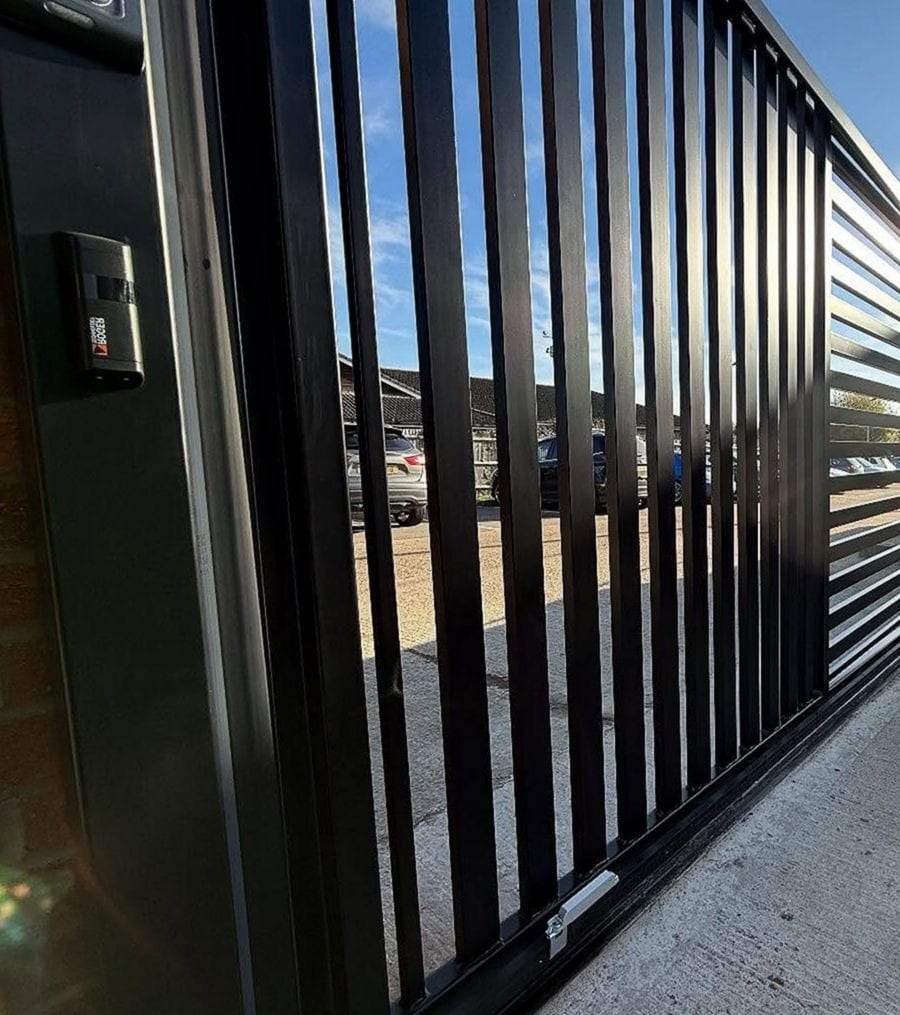
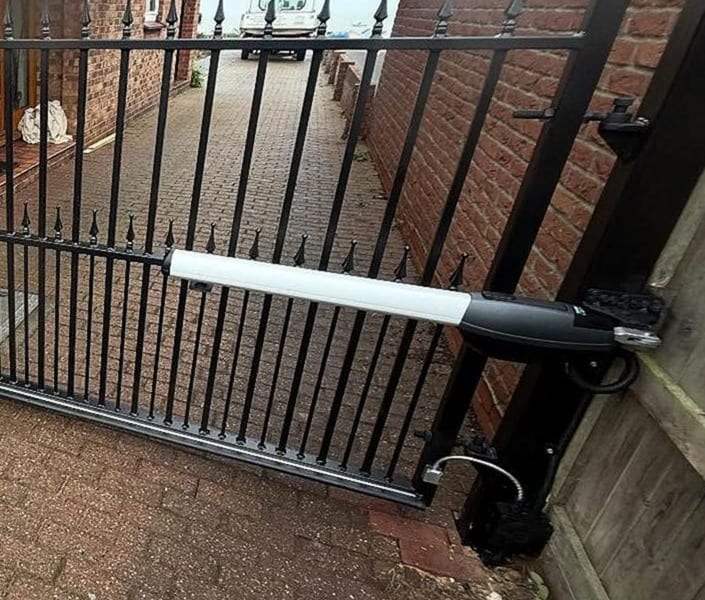
Automatic gates are heavy machines that move on their own. The standards below are the reason they come with sensors, guards and a release.
More columns to the right: swipe.
| Rule or device | What it covers | Why it matters |
|---|---|---|
| UL 325 | Safety standard for gate operators, including entrapment protection, by usage class | Requires the operator to sense an obstruction and stop or reverse |
| ASTM F2200 | Construction of automated vehicular gates: openings, rollers, guards, protrusions | Keeps hands, feet and heads out of places a moving gate can trap them |
| Photo eyes and edge sensors | Non-contact beams across the path and contact edges on the gate | Stop and reverse the gate before or as it touches someone |
| Manual release | A way to free the gate from the operator by hand | Lets people out during an outage or a failure |
| Pinch-point and gap guarding | Covers and screens at rollers, hinges and openings near the post | Prevents fingers and limbs from being caught |
| Disconnect and low-voltage wiring | A local power disconnect and properly run control wiring | Safe service work and fewer faults from damaged wire |
| Fire department emergency access | A key switch, siren or strobe sensor, or a code for responders | Emergency vehicles must get through a closed gate |
| City or county permit checks | Fence and gate height, placement and electrical work | Rules differ between Loveland, other towns and Larimer County |
What a Proper Final Test Covers
- Reversal on an obstruction placed in the gate’s path
- Photo eyes stopping and reversing the gate when the beam is broken
- Limit settings: the gate stops fully open and fully closed, where it should
- The manual release frees the gate and re-engages cleanly
- Every remote and keypad code in use
- Emergency access, where the gate has a device for it
Sensors and Doing It Yourself
Why are safety sensors required on an automatic gate?
An automatic gate is heavy and does not see what is in its way. UL 325 requires gate operators to have entrapment protection, and photo eyes and safety edges are the usual way to provide it: they stop and reverse the gate when a person, a pet or a vehicle is in its path. A gate with its sensors disconnected or covered is a hazard, whatever the inconvenience they cause.
What can an owner safely do alone?
Keep the track and the swing path clear, wipe the photo-eye lenses, watch and listen for changes, and use the manual release as the owner’s manual describes. Leave the control box, the force and limit settings, the safety devices and anything that means lifting or supporting the gate to a technician.
Talk Through a Gate Job
Call or send the request form with the gate type and what it is doing. Photos and a few measurements are a good place to start.