
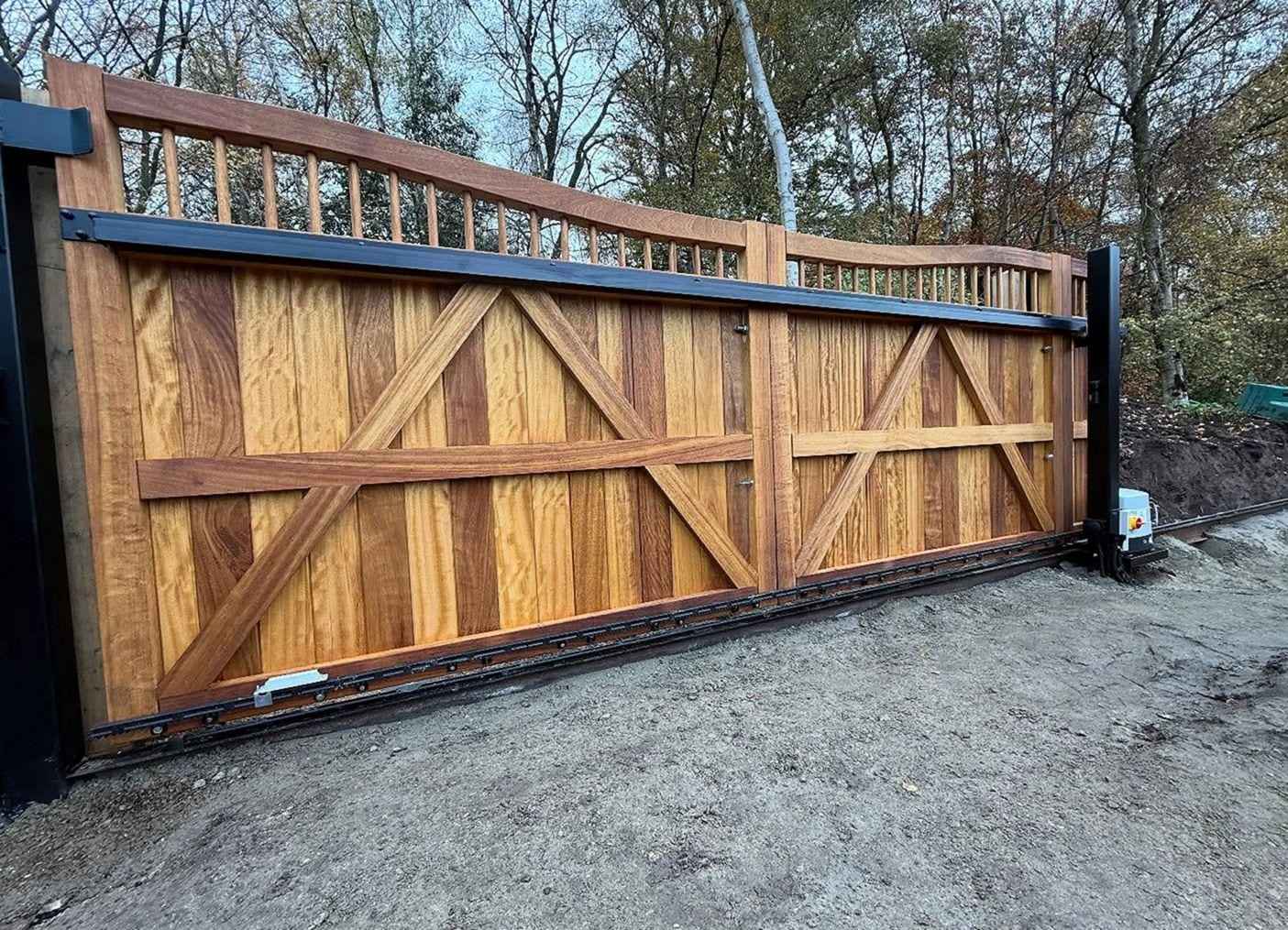
New Gate and Operator Installation
A new gate is a small structure with a motor on it. It has to hang on posts that stay put through the frost, clear the ground through its whole travel, stand up to the wind, and open for the people who should come in. Planning it well means looking at the opening, the slope, the soil, the power and the rules before choosing the gate. Driveway gate installation is one of the jobs we do most, on new homes and existing properties, acreage and horse properties, HOA entrances and small commercial lots.
Gate Types Compared
More columns to the right: swipe.
| Gate type | Best suited to | Space needed | Local considerations |
|---|---|---|---|
| Single swing | Driveways up to a moderate width, walk gates | The gate’s width as clear ground inside the swing | A drive that rises into the swing needs extra clearance; snow piled in the arc stops it |
| Double swing | Wide drives and formal entries | Half the opening’s width inside the swing on each side | Two lighter leaves load posts less in the wind; plow snow away from the swing |
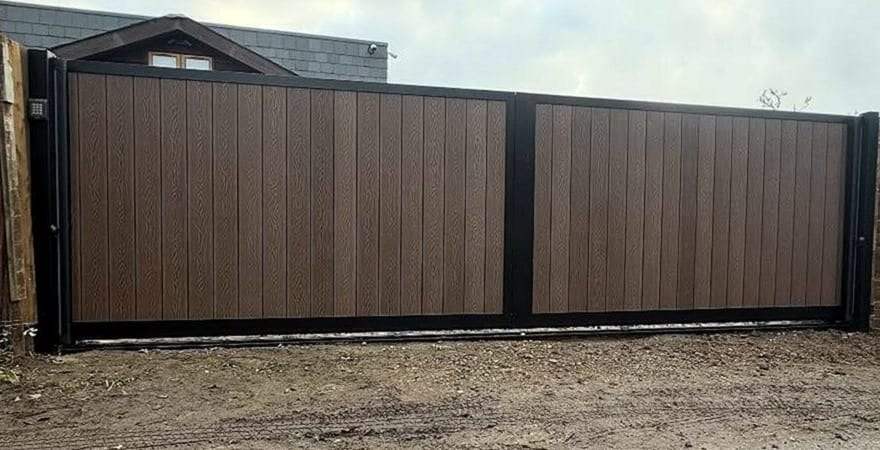
| Sliding | Wide or sloped openings, short drives, busy entrances | A run beside the opening at least the gate’s length | Ground track packs with snow and ice; a cantilever gate rides above it |
| Ranch-style entry | Acreage and horse properties, long lanes | As for swing or sliding, plus room for trailers to turn | Long runs to power often favor solar; open rails shed wind |
| Barrier arm | Shared entrances, small commercial lots | The lane width and a pad for the operator | Clear sight lines and a loop detector for exiting vehicles |
Size the Operator to the Gate
Gate and Operator Sizing Guide
Choose what you know about the gate. The guide suggests an operator class and the points worth discussing; the visit confirms it.
Choose the gate’s details above, then press the button.
Site Details to Gather
These are the measurements and facts that shape a new gate. Rough numbers are fine to start:
- The opening width, post face to post face
- The slope across the opening and up or down the drive
- The distance to power: an outlet, a panel or the house
- Where the gate would swing or slide, and what is in that space now
- HOA or city rules for gates, fences and their height
Photos of the opening from the street and from inside, emailed with these notes, let us plan most of the job before the site visit, which is then kept for checking the ground and the posts.
Ground, Wind and Snow at the Gate Line
Frost-depth footings. Posts and operator pads set too shallow get lifted by frost and tilt over a few winters. Gate posts go into concrete below the local frost line, so the hinge line stays where it was built.
Expansive clay. Much of the ground along the Front Range is clay that swells when wet and shrinks when dry. Wider, deeper footings, gravel for drainage and keeping roof and sprinkler water away from the posts limit the movement.
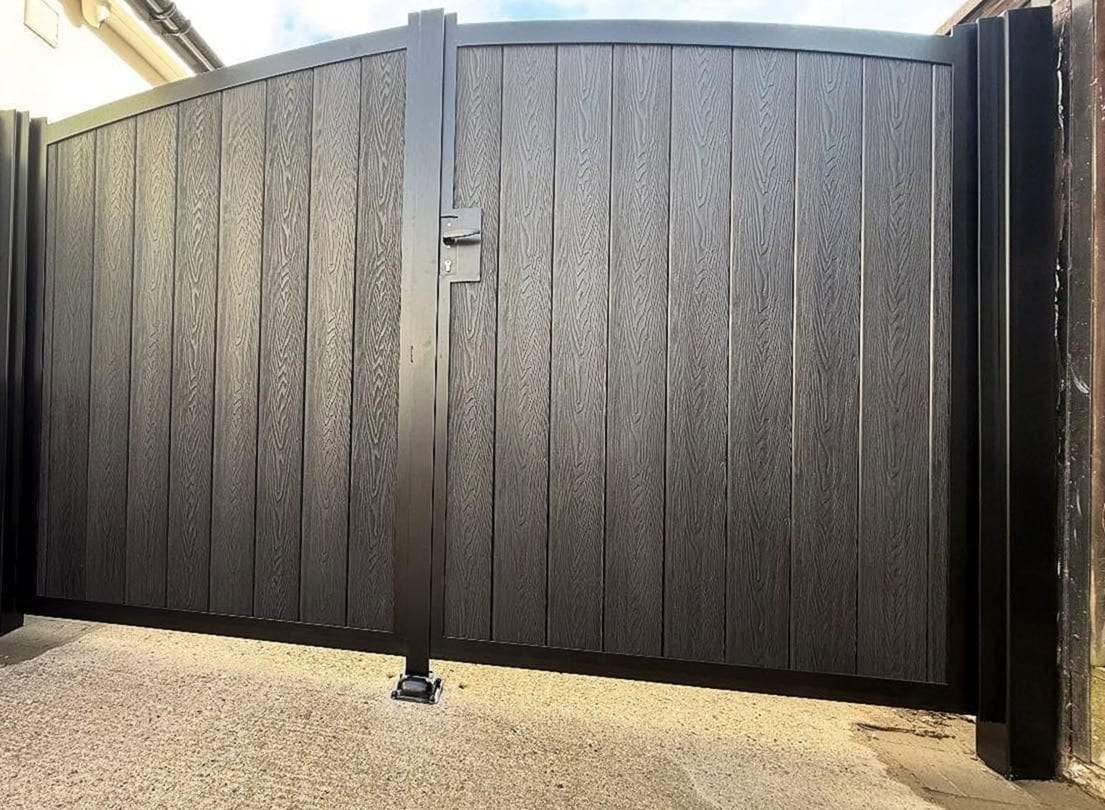
Wind on solid panels. A solid privacy gate is a sail in the gusts that come off the foothills. It needs heavier posts and hinges, an operator with margin, and often a lock that holds it closed.
Snow drift at the gate line. Snow drifts against fences and gates and piles where the plow leaves it. Sliding gates need their track kept clear, and swing gates need the ground in their arc left free of banks.
Permits and Neighborhood Rules
Do we need to check fence, height or HOA rules before a new gate goes in?
Yes. Many HOAs set the style, height and color of gates and fences, and some want plans approved first. The City of Loveland, other towns and Larimer County each set their own fence and gate rules, and an electrical permit may apply to the operator’s power. Check with the HOA and with the city or county building office for the property’s address before ordering a gate.
Can a gate go across a shared or private road?
A gate on a shared drive or private road usually needs the agreement of everyone with access, and a fire department emergency access device may be required. Both are worth settling before the design is final.
Plan a New Gate
Call or send the request form with the opening width and a few photos. That is enough to start talking through the gate type, the operator and the ground.